Confidence vs Competence in Sea Kayaking
The difference between confidence and competence in sea kayaking isn’t always obvious — especially in calm conditions.
Confidence often grows quickly.
In fact, it can develop after only a handful of successful trips in calm conditions.
Confidence on the sea may come from:
- Buying good equipment
- Feeling physically strong
- Watching a few instructional videos
- Experiencing several days where everything goes smoothly
None of that is wrong. However, it can create an impression of control before deeper experience has formed.
And none of that is wrong.
By contrast, competence develops more gradually and grows from;
- Seeing how quickly conditions can shift
- Recognising subtle warning signs early
- Understanding how tide, wind and swell interact
- Adjusting plans before small issues compound
As a result, decision-making becomes proactive rather than reactive.
The sea doesn’t reward confidence.
The sea rewards judgement.
Confidence vs Competence in Sea Kayaking: Why It Matters
Early trips are often made in good conditions.
The weather looks settled.
The forecast seems clear.
The water is calm.
And nothing goes wrong.
That can create a powerful — but fragile — belief:
“I’ve got this.”
The problem, however, is that most incidents don’t happen because someone lacked courage or enthusiasm.
They happen because small decisions compound.
A slightly stronger wind than expected.
A tide running faster than anticipated.
A landing that looked easy from shore.
Individually they are all totally manageable.
But together, they are stressful.
Competence Is Pattern Recognition
In contrast, experienced paddlers don’t just know what to do.
They recognise patterns early.
Overtime they notice:
- A change in water texture
- A shift in wind direction
- A delay in timing through tide races
- Fatigue building quietly in a group
They adjust before things escalate and that’s real competence.
So How Do You Build It?
Not through bravery and not through pushing limits every time.
True competence builds through:
- Exposure to different conditions
- Talking through decisions with others
- Learning why a route was chosen
- Seeing how timing is adjusted
- Making mistakes in low-risk environments
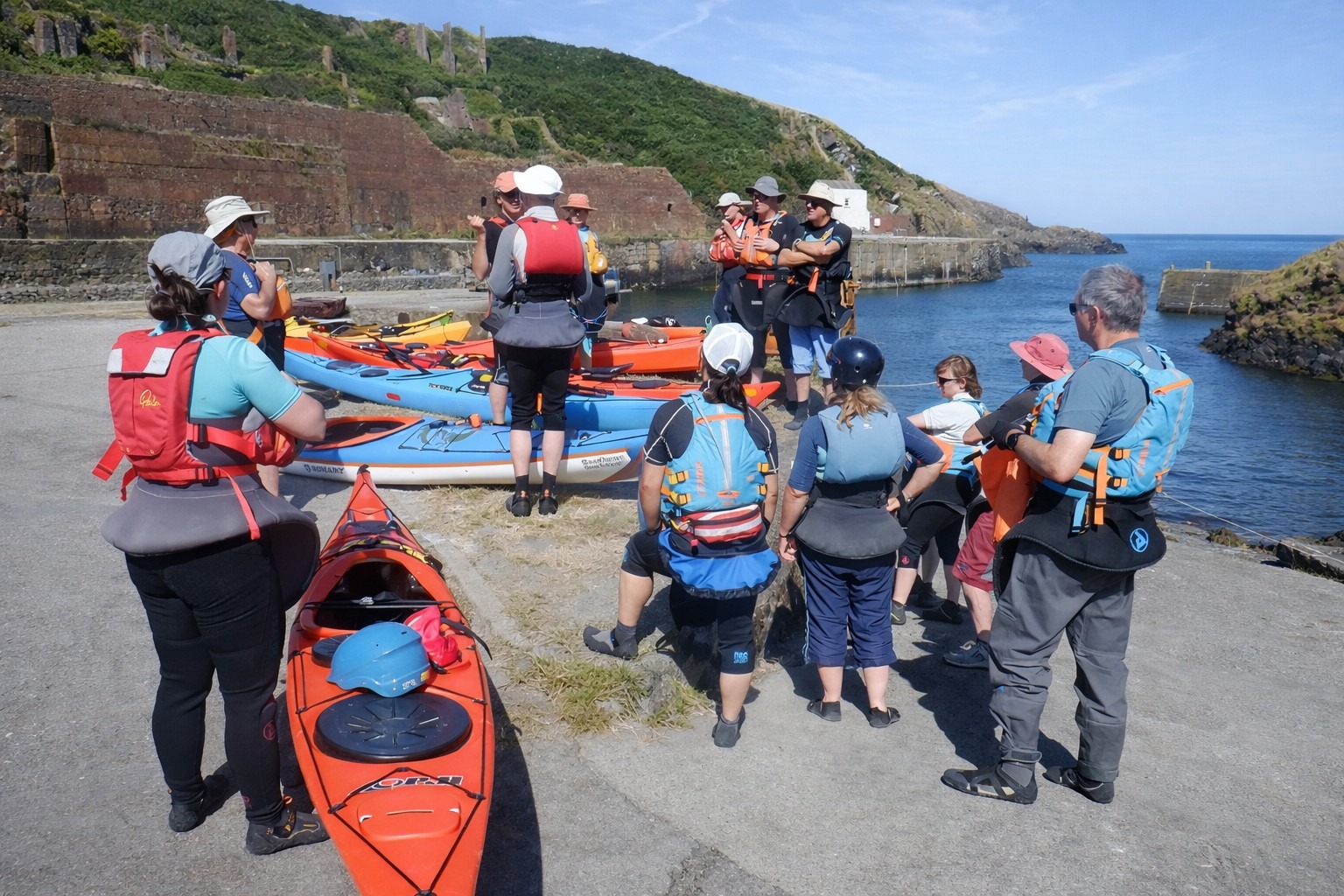
This is one reason many paddlers benefit from structured learning early on — not because they lack independence, but because it accelerates judgement.
A short period of learning alongside experienced paddlers often compresses years of trial-and-error into months.
The Most Underrated Skill
The most underrated skill in sea kayaking isn’t rolling.
It’s deciding when not to go.
Walking away on the right day builds more competence than launching on the wrong one.
That decision becomes easier when you’ve seen enough examples to recognise what “borderline” actually looks like.
Sea kayaking is deeply rewarding but the sea is neutral and it doesn’t care how enthusiastic you are; it simply responds to physics.
Although confidence feels good, it is competence that keeps you safe.
If you’d like to explore how judgement develops in real coastal conditions, you can see available courses here.
https://www.mayberrykayaking.co.uk/courses/
Frequently Asked Questions
What is the difference between confidence and competence in sea kayaking?
Confidence is how capable you feel. Competence is the ability to recognise and respond appropriately to changing coastal conditions. While confidence can grow quickly, competence develops through varied experience and exposure to real decision-making situations.