
What is the Huntsman’s Leap?
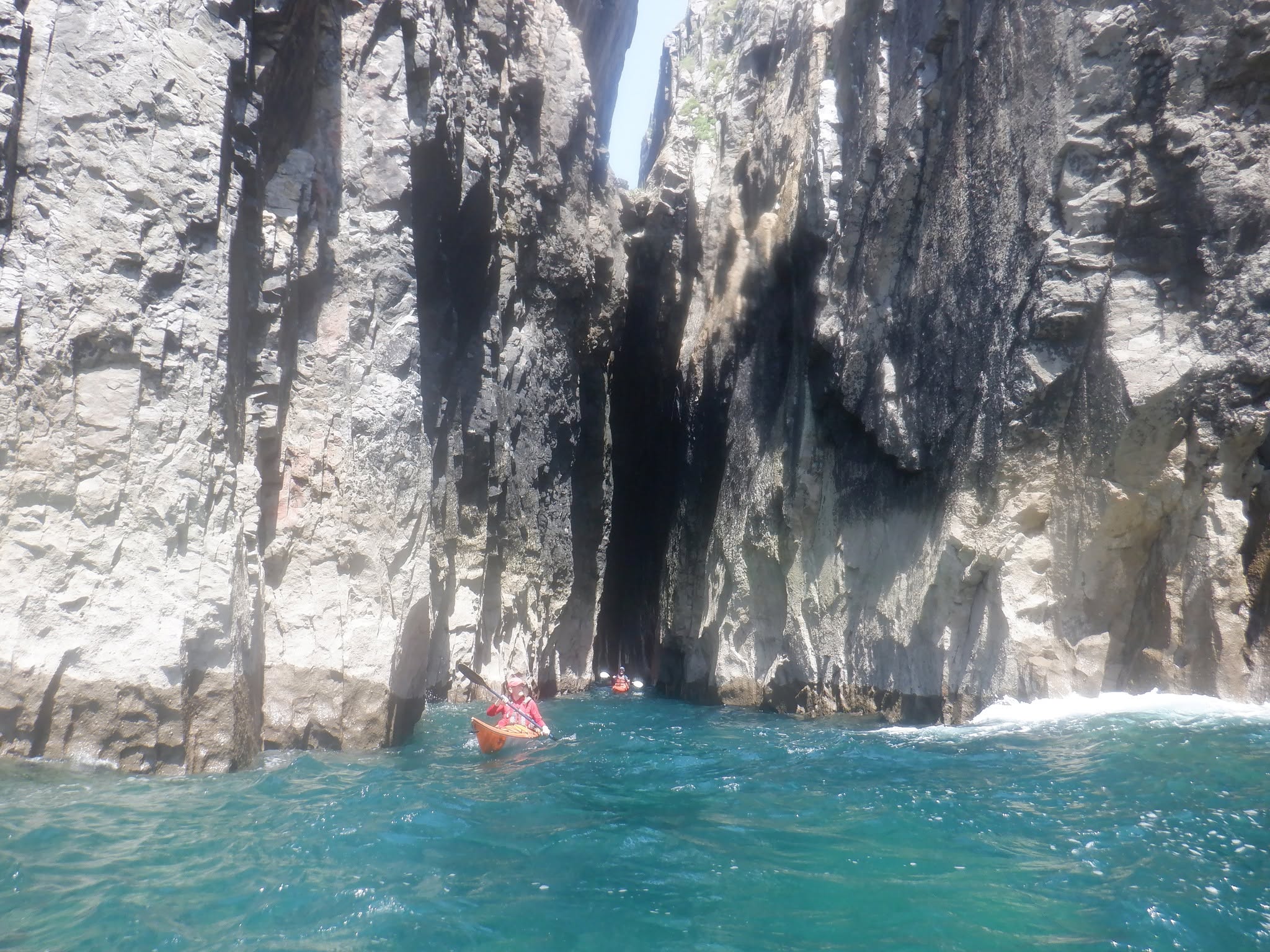
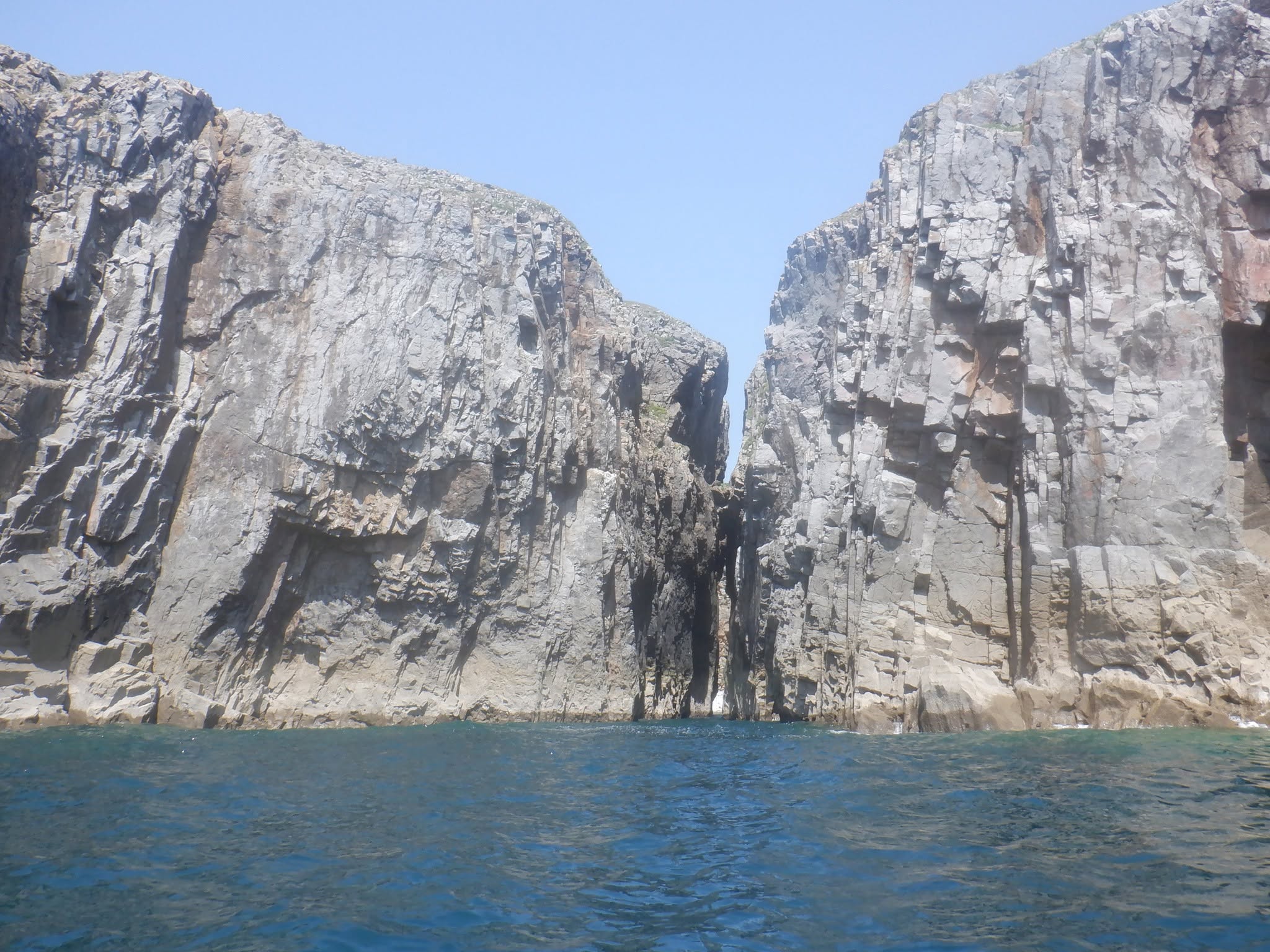
The Huntsman’s Leap is one of the most dramatic coastal features on the Pembrokeshire coast. Located on the Castlemartin Ranges, it consists of a deep, narrow chasm cut into the cliffs by thousands of years of wave action and erosion.
Viewed from above, it appears as though a giant knife has sliced through the headland, creating a spectacular gap between the rock faces. From the sea, the scale of the feature becomes even more impressive, with towering cliffs rising above the water and Atlantic swells surging through the narrow opening.
It is one of those locations that immediately captures the imagination and has become a favourite landmark for walkers, photographers and sea kayakers exploring this remarkable stretch of coastline.
Why Is It Called The Huntsman’s Leap?
Like many places along the Pembrokeshire coast, the Huntsman’s Leap has its own local legend.
The story tells of a huntsman who jumped the gap for a wager. He and his horse made the leap across the gap and somehow reached the far side safely. After turning a faced with the shock of what he’d done, he promptly died of a heart attack.
Whether the tale is entirely true or has become embellished over time is impossible to know, but it has certainly endured. Standing beside the chasm and looking across the gap, it is easy to understand why the story captured people’s imaginations.
The combination of dramatic scenery and local folklore helps make the Huntsman’s Leap one of the most memorable landmarks on the Pembrokeshire coast.
What Does The Huntsman’s Leap Look Like From The Water?
While the Huntsman’s Leap is impressive from the coast path, experiencing it from sea level is something entirely different.
Unlike many of Pembrokeshire’s more accessible landmarks, reaching the Huntsman’s Leap by sea kayak requires commitment. To and from either of the nearest launch points, paddlers should expect a journey of more than five hours along an exposed and committing section of coastline.
The reward is one of the most spectacular stretches of coast in Wales.
The limestone cliffs rise dramatically from the sea, sculpted by thousands of years of wave action. Along the way paddlers pass some of Pembrokeshire’s most iconic landmarks, including the Green Bridge of Wales, the Elegug Stacks and the historic St Govan’s Chapel, all set against a backdrop of towering cliffs and crystal-clear water.
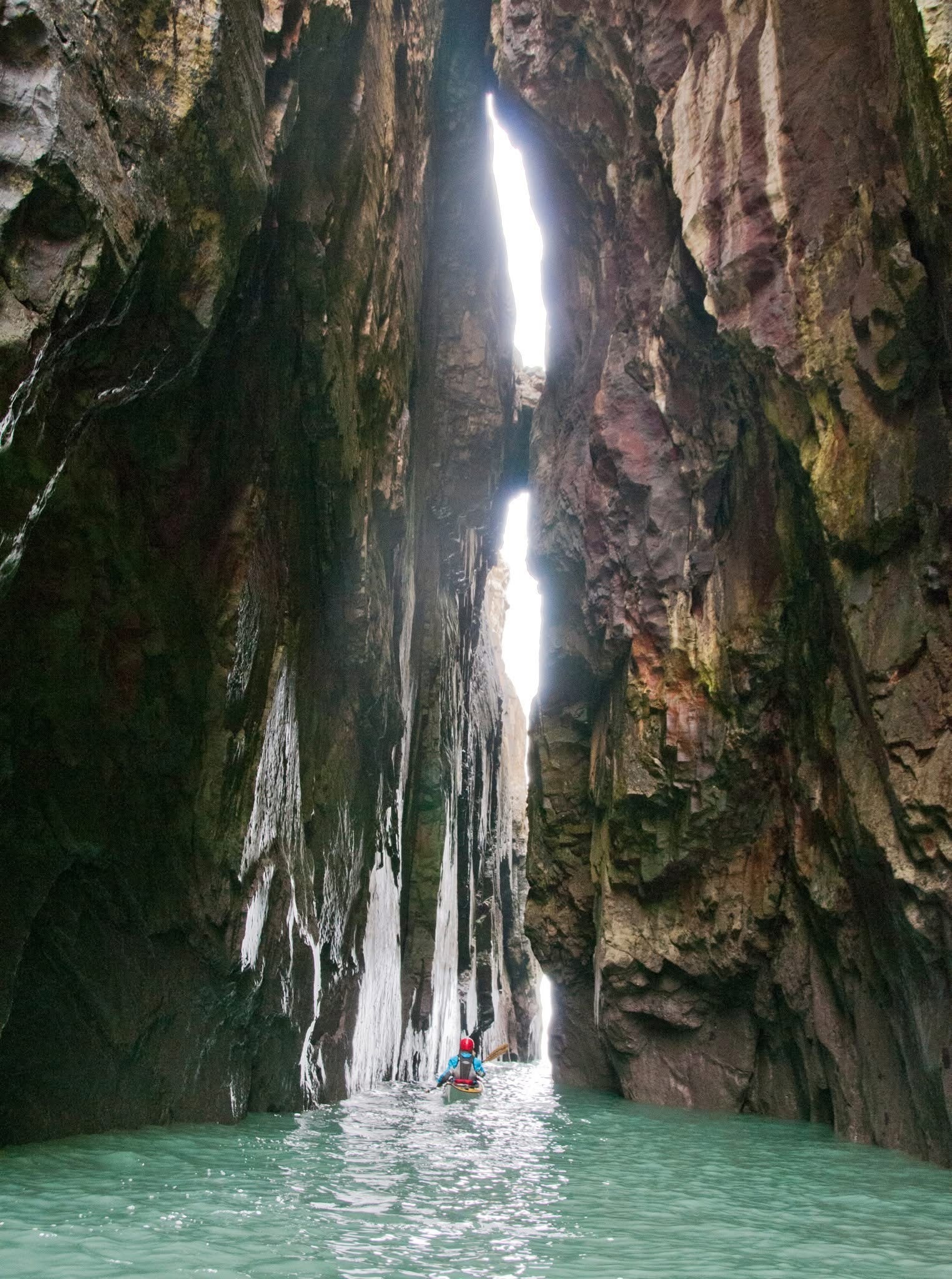
Arriving at the Huntsman’s Leap itself feels like reaching a destination rather than simply passing another coastal feature. The deep chasm cuts dramatically through the headland, creating a feature that is every bit as impressive from the water as it is from above.
For many experienced sea kayakers, this section of coastline represents one of the finest paddling journeys anywhere in the UK.
Mike’s View
Having paddled every section of the Pembrokeshire coastline, this remains one of my favourite journeys. Not because of the Huntsman’s Leap itself, but because of everything that comes with it. The Green Bridge of Wales, the Elegug Stacks, St Govan’s Chapel and mile after mile of spectacular limestone cliffs combine to create a journey that feels genuinely adventurous. When the conditions are right, it is difficult to think of a better day’s sea kayaking in Wales.
Experience Some of Pembrokeshire’s Most Spectacular Coastline
The Pembrokeshire coastline contains countless hidden gems, but few journeys combine dramatic scenery, fascinating history and world-class sea kayaking quite like this section of coast.
Whether exploring sea caves, paddling beneath towering cliffs or encountering wildlife along the way, sea kayaking offers a unique perspective on one of Britain’s most beautiful coastlines.
If you’d like to discover more of what makes Pembrokeshire such a special place to paddle, take a look at our guided sea kayaking adventures and training courses.
Can You Visit The Huntsman’s Leap By Kayak?
Yes, but this is not a destination for novice paddlers.
The Huntsman’s Leap lies on a remote and exposed section of coastline where conditions can change quickly. Strong tidal streams, open-water exposure and limited escape options mean that the journey requires good judgement, appropriate equipment and the ability to deal with changing sea conditions.
Tidal streams along this section of coast can reach around four knots, making route planning and timing important considerations. Wind, swell and sea state can all have a significant influence on the suitability of a trip.
For experienced paddlers, these factors are part of what makes the journey so rewarding. The sense of travelling through a wild and remote landscape, powered only by your own effort and skill, creates an experience that remains long in the memory.
The key is choosing conditions that match both your ability and your objectives. As with many of Pembrokeshire’s finest paddling destinations, good local knowledge can make all the difference.
Conclusion
The Huntsman’s Leap is one of those places that perfectly captures the character of the Pembrokeshire coast.
Dramatic geology, local folklore, abundant wildlife and stunning scenery combine to create a location that leaves a lasting impression on everyone who visits.
Seen from the cliff path it is impressive. Experienced from the cockpit of a sea kayak it becomes something even more memorable.
For many paddlers, it is one of the highlights of exploring the Pembrokeshire coastline and a reminder of just how remarkable this corner of Wales truly is.